North Carolina 2026 Supreme Court Election
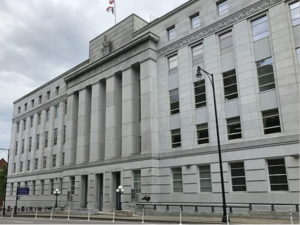
North Carolina Supreme Court Election
North Carolina elects its supreme court justices in partisan elections. One seat on the North Carolina Supreme Court is on the ballot in the Tuesday, November 3, 2026, general election. Incumbent Associate Justice Anita Earls (D) faces former Rep. Sarah Stevens (R). Voters can confirm their registration, polling location, absentee ballot information, and sample ballot through the North Carolina State Board of Elections Voter Search tool.
How You Can Get Involved
- Make a voting plan. Election Day is Tuesday, November 3, 2026. North Carolina polling places open at 6:30 AM and close at 7:30 PM. Any voter in line at 7:30 PM may vote. Confirm your assigned polling location before voting.
- Check your registration and ballot. Use the North Carolina State Board of Elections Voter Search tool to confirm your registration status, polling location, absentee ballot information, and sample ballot. The voter registration deadline for the general election is 5:00 PM Friday, October 9, 2026. Eligible voters who miss the deadline may register and vote at an early voting site during the in-person early voting period.
- Prepare for identification requirements. North Carolina voters must show photo identification when checking in to vote. Review the accepted forms of photo ID and available exception procedures before voting.
- Plan early for absentee or early voting. Any registered North Carolina voter may vote absentee by mail. The absentee ballot request deadline is 5:00 PM Tuesday, October 20, 2026, and the county board of elections must receive completed absentee ballots by 7:30 PM on Election Day. In-person early voting runs from Thursday, October 15, through 3:00 PM Saturday, October 31, 2026.
Make sure to vote your entire ballot, especially the North Carolina Supreme Court race.
The Stakes
The North Carolina Supreme Court is the state’s highest court—meaning its decisions are the final word on everything from preventing corporate greed to protecting your right to vote, public education, and health care access. In recent years, the court’s conservative majority revisited past cases it had already decided and reversed several of its own rulings.
In 2023, the court made an unprecedented move. After ensuring every North Carolinian’s access to the ballot by overturning a gerrymandered congressional map and blocking a discriminatory voter ID law, the court — under a new conservative majority just months after the original decision — decided to rehear those two cases. The new majority reversed itself, approving the gerrymandered maps and voter ID law. This unprecedented reversal within months of the original decision shows the court’s ability to drastically reshape and affect your rights.
Earlier this year, the court reversed its past decision in the Leandro cases, which first established that every child has a constitutional right to a sound and basic education. After the state was sued for failing to fulfill that right, the courts developed and ordered a plan to distribute $1.75 billion to rectify inequities across the schools. In 2022, the supreme court affirmed the transfer of funds and the start of the plan. However, after the plan was challenged again, the court overturned its earlier decision and prevented the plan from continuing, meaning inequities across districts persist, and some children are left without sound, basic public education.
Beyond voting rights and education access, the North Carolina Supreme Court further impacts your everyday life by directly reviewing appeals of decisions, orders, or new rules issued by the North Carolina Utilities Commission, the agency charged with reviewing and setting utility rates for consumers. In 2020, the court approved an electricity rate hike within the mandatory fees consumers had to pay, and in 2022 the court eased the burden on consumers by lengthening the period utility providers could raise rates. However, earlier this year, the majority on the state supreme court rubber-stamped a rate increase for Duke Energy customers that would disproportionately impact customers in the central and western regions of the state. The court’s decision meant that customers in the west and central regions would be overcharged for the same services that customers in the east receive for lower prices.
The Candidates
Incumbent Justice Anita Earls (D) is running for reelection to the North Carolina Supreme Court. Former state representative and speaker pro tempore Sarah Stevens (R) is challenging Justice Earls.
Justice Earls was first elected to the court in 2018 and is running for another full eight-year term. Prior to her election to the court, Justice Earls worked as a civil rights attorney in private practice and with the US Department of Justice.
Stevens previously served as a state representative and speaker pro tempore in the North Carolin State House. She was first elected to the House in 2008 and served nine terms. Stevens stepped down in June 2026 to focus on this campaign. Prior to becoming a state lawmaker, Stevens worked in private practice focusing on family law.
Voter Registration Tools
Check Your Registration Status
Register to Vote
Get Your Absentee Ballot