Michigan 2026 Supreme Court Election
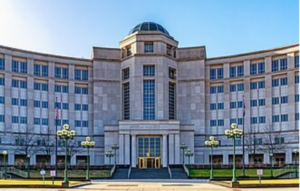
Understanding the Michigan Supreme Court
What you need to know about the Michigan Supreme Court election
It’s the most important election on your ballot!
The Michigan Supreme Court is the state’s highest court. Its seven justices serve eight-year terms and are chosen in statewide elections. Candidates are nominated through party conventions, but party labels do not appear beside their names on the general-election ballot. Two seats are scheduled for election on November 3, 2026, and voters may select up to two candidates in the nonpartisan section of the ballot.
How You Can Get Involved
- Make a voting plan. Election Day is Tuesday, November 3, 2026. Michigan polling places open at 7:00 AM and close at 8:00 PM local time. Any voter in line when the polls close may vote. Confirm your assigned polling location before voting.
- Check your registration and ballot. Confirm your registration status, polling location, early voting site, absentee ballot status, and sample ballot through the Michigan Voter Information Center. The deadline to register online or by mail is Monday, October 19, 2026. From October 20 through Election Day, eligible voters may register in person at their city or township clerk’s office with proof of residency.
- Voting when overseas. Eligible Michigan voters living overseas or serving in the military can register to vote by completing the Federal Post Card Application (FPCA) or the Federal Write-In Absentee Ballot (FWAB). If voters submit another type of registration form, such as the State of Michigan Voter Registration Application, it will also be accepted and processed.
- Know Michigan’s identification procedure. Voters are asked to show an accepted photo ID when checking in, but photo ID is not required to vote. A voter without an acceptable photo ID may sign an affidavit and cast a regular ballot.
- Plan early for absentee or early voting. Any registered Michigan voter may vote absentee without providing a reason. Online and mailed absentee ballot applications must reach the local clerk by 5:00 PM Friday, October 30, 2026; voters may request and vote an absentee ballot in person at the clerk’s office until 4:00 PM Monday, November 2. Completed absentee ballots generally must be received by the clerk by 8:00 PM on Election Day. The statewide in-person early voting period runs from Saturday, October 24, through Sunday, November 1, 2026; locations and hours vary by community.
Make sure to vote your entire ballot, especially the Michigan Supreme Court races.
State courts decide over 95% of all cases in the United States and have the last word on dozens of issues that impact the lives of people living in every state. These courts play a critical role in protecting our democracy and fundamental rights, so it’s crucial that the judges who sit on these benches will protect the rights of the people, not just the wealthy and powerful. Judges who are empowered to make these decisions must possess the lived experience to understand how their decisions will impact people’s lives, and it’s up to us to ensure these judges will protect and defend our rights.
Why the Court Matters
The court has the final authority on questions of Michigan law and the Michigan Constitution. It reviews a small share of the cases presented to it each year, and its decisions establish precedent for courts throughout the state. Those decisions can affect election administration, criminal procedure, consumer protection, employment, property, and the authority of state and local government.
Recent election-related decisions illustrate the court’s role in interpreting citizen-initiative and voting provisions. The court permitted a proposal creating an independent redistricting commission to appear on the 2018 ballot. In 2022, it held that statutory geographic limits and disclosure rules for petition circulators conflicted with the Michigan Constitution. It also directed the Board of State Canvassers to certify proposals concerning voting access and reproductive freedom. In 2024, the court addressed the legislature’s authority to adopt and amend a citizen-initiated proposal during the same legislative session.
The court has also interpreted constitutional and procedural protections in criminal cases. Its recent decisions have addressed the use of acquitted conduct at sentencing, life-without-parole and lengthy sentences for young defendants, the availability of expert testimony on diminished capacity, warrantless vehicle searches prompted by cannabis odor, and the use of DNA collected after an arrest to investigate unrelated offenses. These rulings define how constitutional protections and court procedures apply across Michigan.
In civil cases, the court has considered whether former homeowners are entitled to surplus proceeds after tax-foreclosure sales, whether changes to auto no-fault medical-payment rules apply to previously injured claimants, when employees may bring wrongful-discharge claims, how consumer-protection law applies to businesses, and whether state agencies followed required procedures when reviewing major infrastructure permits. The outcomes affect how courts interpret statutes and constitutional protections, but the court decides only the legal questions presented in each case.
2026 Election Information
Six candidates are listed for the two seats: Megan Cavanagh, Noah Hood, Thomas Howe, Casandra Morse-Bills, Michael D. Warren Jr., and Jody White. Cavanagh and Hood are incumbents. Voters should consult the Michigan Voter Information Center, official candidate materials, and multiple independent sources for current ballot information and candidate statements.
Cavanagh has served on the Michigan Supreme Court since 2019 and became chief justice in 2025. Hood joined the court in 2025 after service on the Michigan Court of Appeals and Wayne County’s Third Judicial Circuit Court. Morse-Bills serves on the Oscoda County trial court and previously served as county prosecutor. Warren has served on the Oakland County Circuit Court since 2002. The U.S. Taxpayers Party of Michigan nominated Howe and White, but neither candidate qualifies to serve under a plain reading of the state constitution.
Voter Registration Tools
Check Your Registration Status
Register to Vote
Get Your Absentee Ballot