Michael Park
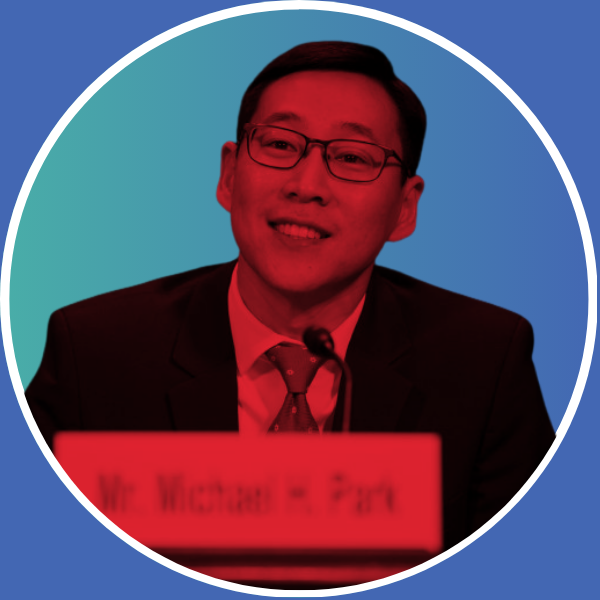
Michael Park has dedicated his legal career to advancing ultraconservative causes. Park began his career by clerking for far-right Supreme Court Justice Alito and served as an attorney advisor with the Department of Justice (DOJ) during the George W. Bush administration. In 2015, Park joined Consovoy McCarthy Park as a name partner and specialized in appellate and complex litigation. This law firm is “the go-to legal shop for conservative ideologues looking to fight everything from voting rights to affirmative action to abortion.” The firm led the effort to erode voting rights and equal representation in Shelby County v. Holder and Evenwel v. Abbott.
While at the firm, Park defended President Trump in a suit alleging that he violated the Constitution’s Emoluments Clause, represented the state of Kansas in its efforts to cut Medicaid funding for Planned Parenthood, and fought on behalf of the plaintiffs in the landmark Supreme Court case ruling that affirmative action policies were unconstitutional. In 2018, Trump nominated Park to the U.S. Court of Appeals for the Second Circuit. Despite objections from his home-state senators and his complete lack of trial experience, Park was confirmed. Now on the federal bench, he has continued to advance his conservative agenda at the expense of workers, consumers, and immigrants.
- Fought to Eliminate Affirmative Action in Colleges. Park represented Students for Fair Admissions in lawsuits against Harvard University and the University of North Carolina to abolish their race-conscious admissions policies. The case was considered “one of the most high-profile and controversial lawsuits designed to end affirmative action in college admissions.” Even though affirmative action exists to bridge equity gaps, the Supreme Court’s conservative majority held that these race-conscious admissions programs violated the Equal Protection Clause. Park’s work to dismantle affirmative action has reversed decades of progress that will stifle diversity in higher education and negatively impact our society’s economic and social development for years to come.
- Pushed for a Racially Targeted Census Question on Trump’s Behalf. Park defended the Trump administration’s effort to insert a citizenship question into the 2020 census, which would have resulted in as many as 6.5 million people being undercounted. Park authored an amicus brief arguing that the question would provide “critical” data and was “at DOJ’s urging.” However, former Census Bureau directors explained that it would actually “compromise data quality and census accuracy by depressing response rates and introducing a differential impact on specific populations.” Additionally, evidence showed that Stephen Bannon and Kris Kobach pushed for the additional citizenship question — not the DOJ.
- Advanced Big Companies’ Interests in Private Practice and on the Bench. Park has worked as both an attorney and a judge to make it more difficult for workers to hold corporations accountable. As an attorney, Park wrote an amicus brief on behalf of the Chamber of Commerce in a case where a company knowingly sold asbestos-laden products without providing warnings, leading to the death of the plaintiffs. Park argued for an inflexible rule immunizing manufacturers from liability and suggested that they had no moral or legal obligation to warn consumers. He even argued that forcing manufacturers to do so would be a waste of resources. As a judge, Park wrote the opinion for Murray v. UBS Securities, LLC, in which a whistleblower sued his employer after he was fired in retaliation for reporting fraud. Park’s opinion ruled against the whistleblower, using an inflated and overly stringent legal standard that the Supreme Court later unanimously overruled. The case demonstrates Park’s tendency to side with corporate interests over everyday people, even if it means ignoring the law and precedent.
- Ruled Against an Asylum Seeker Despite Proof of Gang Targeting. In Garcia Martinez v. Bondi, Park and two other Second Circuit judges affirmed a decision denying asylum to Cecilia Yamileth Garcia Martinez, an El Salvadorian woman who fled the country due to fear of retaliation for “refus[ing] to join gangs.” During attempts to recruit Martinez, gang members threatened to kill her and her brother. These gangs sought Martinez out because of her family ties and even killed her two cousins. Despite these facts, Park concluded this wasn’t enough to prove her case.